
The Mystery of Tartaria: Rediscovering the Lost World
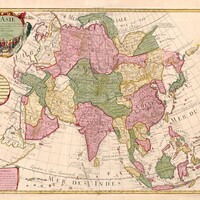
For centuries, maps of the world featured a vast, sprawling territory that has since vanished from our modern atlases. Spanning from the Caspian Sea to the Pacific Ocean, the name **Tartaria** (or Great Tartary) once commanded as much space on a globe as the Roman Empire or the United States does today.
But what happened to this legendary realm, and why does its architectural legacy seem to haunt the skylines of our modern cities?
---
## A Giant Hidden in Plain Sight
If you look at maps from the 16th through the 19th centuries, **Tartaria** is impossible to miss. It wasn't just a small province; it was often depicted as the largest country in the world.
While modern history books often categorize "Tartary" as a vague geographical term for the inhabitants of the North Asian steppes, a closer look at the era’s grand architecture suggests a much more sophisticated story. Across every continent, we find a specific, awe-inspiring style of building characterized by:
* **Immense Stone Pillars:** Grand Neoclassical columns that seem built for giants.
* **Star Forts:** Thousands of geometrically perfect "star-shaped" fortifications found globally, from Italy to Japan, featuring precision that defies the tools of the era.
* **Atmospheric Antennas:** Ornate spires, domes, and "power stations" that many believe were designed for more than just aesthetics.
---
## The Architectural Signature: A Global Civilization?
One of the most striking aspects of the Tartarian mystery is the **uniformity of design**. How is it that a courthouse in Iowa, a palace in St. Petersburg, and a post office in Buenos Aires all share the exact same "Beaux-Arts" or "Greco-Roman" DNA?
Some researchers suggest that these weren't built by different cultures, but were the remnants of a **unified global civilization**.
### The "Mud Flood" Evidence
Perhaps the most intriguing physical evidence cited by enthusiasts is the phenomenon of the **buried first floor**. Walk through any "old world" city—London, New York, or Moscow—and you will see windows half-submerged in the earth.
The conventional explanation is that these are basement windows. However, the sheer craftsmanship of these "basements"—often featuring grand entryways and intricate stonework now underground—has led to the theory of a **Great Reset**. This theory suggests a massive geological event, or "Mud Flood," partially buried the old world, and our modern ancestors simply dug out the tops of these buildings and claimed them as their own.
---
## The World’s Fairs: A Final Farewell?
The late 1800s saw a boom in "Great Exhibitions" and World’s Fairs. Cities like Chicago (1893) and St. Louis (1904) seemingly constructed massive, electrified "White Cities" overnight, only to tear them down shortly after the fairs ended.
To some, these weren't temporary structures built of plaster. They were the **final standing citadels** of the Tartarian era—shining examples of "free energy" and advanced tech—put on display one last time before being demolished to make way for the modern industrial age.
---
## Why It Matters Today
Whether you view Tartaria as a forgotten political powerhouse or a lost technological utopia, the core of the interest remains the same: **a deep respect for the past.** In an age of "disposable" architecture and glass boxes, the mystery of Tartaria reminds us to look closer at the world around us. Those old stone buildings with their copper domes and "buried" windows might be telling a much grander story than we were ever taught in school.
---
**What do you think? Is the history of the 19th century exactly as we’ve been told, or are we walking among the ruins of a much older, more advanced world?**
Featured
Featured Item
The Great Deletion: 10 Mind-Bending Secrets of the Tartarian Energy Grid
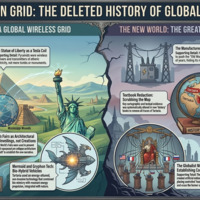
## The Great Deletion: 10 Mind-Bending Secrets of the Tartarian Energy Grid
History is often written by the victors, but what if the version we’ve…
Featured Collection
Featured Exhibit
Recently Added Items
The Great Deletion: 10 Mind-Bending Secrets of the Tartarian Energy Grid
## The Great Deletion: 10 Mind-Bending Secrets of the Tartarian Energy Grid
History is often written by the victors, but what if the version we’ve…
The Mystery of Tartaria: Rediscovering the Lost World
# The Mystery of Tartaria: Rediscovering the Lost World
For centuries, maps of the world featured a vast, sprawling territory that has since…